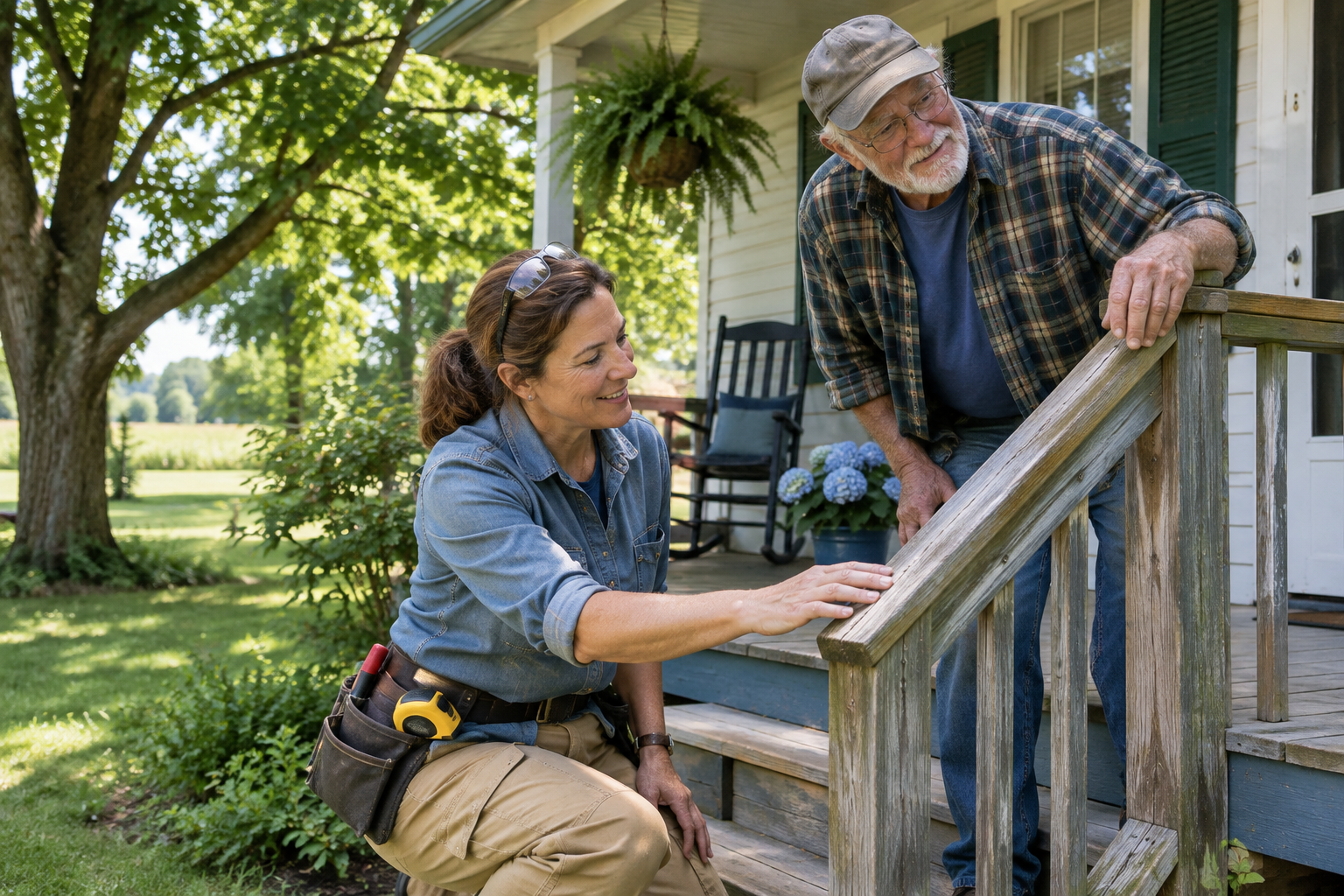
A repair you cannot put off can turn into a financial decision before you have had time to ask about help. A safer place to begin is the actual problem: what needs fixing, whether the home is safe to use, and which program might cover that kind of work.
Home-repair assistance is usually tied to an address, household circumstances and an approved purpose. The useful question is not simply “Are there grants?” It is “Which program fits this home and this repair, and what must happen before work starts?”
Make a clear description of the problem
Write down what is failing, where it is, and how it affects everyday use of the home. Save photos if you can take them safely. Gather any inspection or contractor notes you already have. You do not need to diagnose the building yourself to explain that a handrail is loose or a room is difficult to heat.
If there is an immediate danger, use the appropriate emergency or utility service rather than waiting for a grant decision. For the assistance search, keep your description factual. Ask whether the program needs an inspection or its own cost estimate before you pay for additional paperwork.
In a rural area, check USDA Section 504
USDA’s Single Family Housing Repair Loans & Grants program serves qualifying rural owner-occupied homes. Its loans are for eligible low- or very-low-income homeowners who cannot obtain affordable credit elsewhere. Grants require the applicant to be at least 62 and meet the county’s very-low-income limit. USDA must confirm the address and household eligibility.
The published grant limit is $10,000 over a lifetime. Grant funds address health and safety hazards or accessibility for a household member with a disability. A grant must be repaid if the home is sold in less than three years. Loans have repayment obligations and different permitted uses; do not treat a loan offer as grant money. Start with the local USDA specialist and current official terms.
Official reading: USDA: Section 504 home repair loans and grants
National starting points. Local details.
These guides are written for readers across the U.S. The program serving your address confirms its own eligibility, openings and application steps.
Find your countyFor energy-related work, look at weatherization
The Department of Energy’s Weatherization Assistance Program works through state and local providers. Eligible homeowners and renters can apply. Income rules and local priorities apply, and qualifying can lead to a waitlist. For renters, the provider works with the landlord to obtain permission before work begins.
Weatherization is an assessed service rather than a check for unrestricted remodeling. An energy audit helps determine appropriate work. Use DOE’s state links to find the provider for your area, then ask about its application, income records and current wait. Describe the problem without assuming a particular furnace, window or roof project will be approved.
Official reading: Department of Energy: applying for weatherization assistance
Ask about help tied to your address
A city, county, tribal office or community organization may know about additional local repair resources. Ask your local housing or community-action contact whether it has a current program for your address. Request the program name and official application link so you can check the requirements yourself.
A national program listing can help you discover an option, but it does not prove that local funds remain available. Ask whether the program is accepting applications, whether the work has to be approved in advance, and whether it uses its own contractors or permits you to obtain quotes.
Get the conditions before making a commitment
Before signing for work in anticipation of assistance, ask the administrator how approval and payment work. Find out whether starting early could affect eligibility, who pays the contractor, and whether you would have to pay anything upfront. Keep the response with your application records.
If a loan is one option, ask for the complete written repayment terms and any conditions affecting the property. If a program does not fit, use that answer to narrow the next search: a repair purpose, address or ownership requirement is more informative than a vague promise that “everyone qualifies.”
Keep it simple
Your next-step checklist
- The property address and whether you own or rent
- A plain-language repair description and safe photos
- The program’s inspection and contractor requirements
- Written approval, payment and repayment conditions
Go straight to the source
Official links for this guide
Reviewed November 20, 2026. Program rules and availability can change; confirm current details with the provider.
- USDA: Section 504 home repair loans and grants
- Department of Energy: applying for weatherization assistance
Find More Help is an independent publication. We explain starting points and do not decide eligibility or process applications. Our call checklists are practical preparation suggestions. Photos are illustrative.
Suggest a correction